
Let’s be honest — this debate has been going on for years, and both sides have solid points.
Consoles are convenient, affordable upfront, and incredibly polished. Gaming PCs, on the other hand, offer flexibility, power, and long-term versatility. So instead of pretending one completely destroys the other, let’s look at it properly.
🎮 Performance & Graphics
Modern consoles like the PlayStation 5 and Xbox Series X deliver impressive performance for their price point. 4K gaming, ray tracing, fast SSDs — it’s hard to argue with the value.
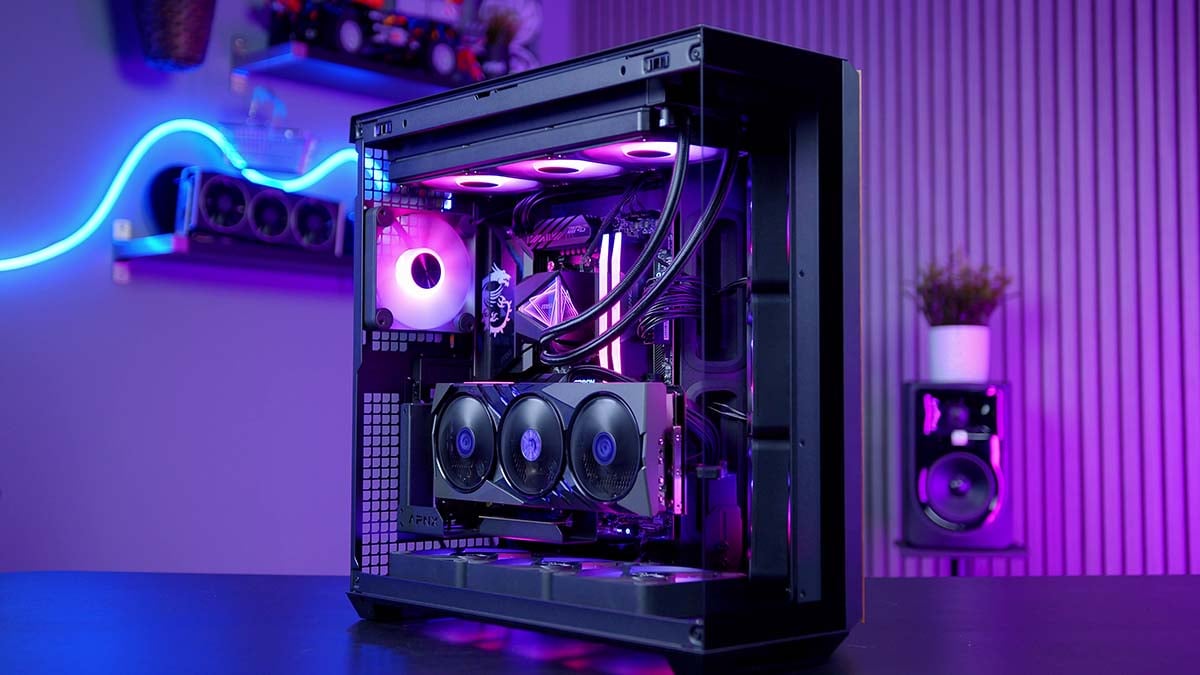
However, gaming PCs aren’t capped at a fixed hardware spec. You can tailor performance to your needs — whether that’s smooth 1080p competitive gaming or high-refresh-rate 1440p and 4K setups. And when hardware evolves, you can upgrade individual components instead of replacing the entire system.
Consoles offer consistency.
PCs offer scalability.
💰 Cost: Upfront vs Long-Term
Consoles typically win on upfront cost. You buy the box, a controller, and you’re ready to go. Simple.
Gaming PCs generally require a bigger initial investment. But over time, PC gamers often benefit from:
- Frequent digital sales
- Multiple storefronts like Steam, Epic Games and GOG
- Free-to-play titles without subscription requirements
- No mandatory online multiplayer fees
When you look at a 5–7 year span, the gap narrows more than people expect.
🕹️ Game Libraries & Ecosystem
Consoles shine with exclusives and tightly optimised releases. The experience is curated and streamlined — developers know exactly what hardware they’re building for.
PC gaming, however, opens up broader access:
- Massive indie libraries
- Early access titles
- Mod support
- Backwards compatibility stretching decades
- Emulation and community projects
It’s less restricted and more open-ended. That freedom appeals to a lot of gamers.
🖱️ Control & Customisation
Console gaming is built around the controller experience — comfortable, straightforward, plug-and-play.
PC gaming gives you options. Keyboard and mouse for competitive precision. Controller if you prefer comfort. Even racing wheels, flight sticks, or custom peripherals.
And beyond controls, PCs allow for deeper personalisation — from graphics settings to hardware aesthetics. It’s a more hands-on experience, which some love and others would rather avoid.
🖥️ Beyond Gaming
This is where PCs quietly pull ahead.
A console is designed for entertainment.
A gaming PC can also handle:
- Streaming
- Content creation
- Work tasks
- Coding
- Design
- General productivity
For someone who wants one machine to do everything, a PC makes practical sense.
🔧 Longevity
Console generations typically last 6–8 years. When the next one releases, upgrading means replacing the whole system.
With a PC, you can gradually improve performance over time — swapping out parts when needed. It spreads out costs and extends usability.
It’s not necessarily cheaper, but it is more flexible.
So… Which Is Better?
If you want simplicity, lower upfront cost, and a polished plug-and-play experience, consoles are excellent.
If you value flexibility, upgradability, broader game access, and having a machine that does more than just gaming, a PC edges ahead.
Neither choice is wrong — it really depends on what kind of gamer you are.
But if you’re someone who enjoys having control over performance, visuals, and long-term capability… a gaming PC might just feel like the more future-ready option.
And once you’ve experienced high refresh rate gaming on a properly built PC, it’s admittedly hard not to notice the difference.